

7 Common Loft Insulation Problems and How to Fix Them
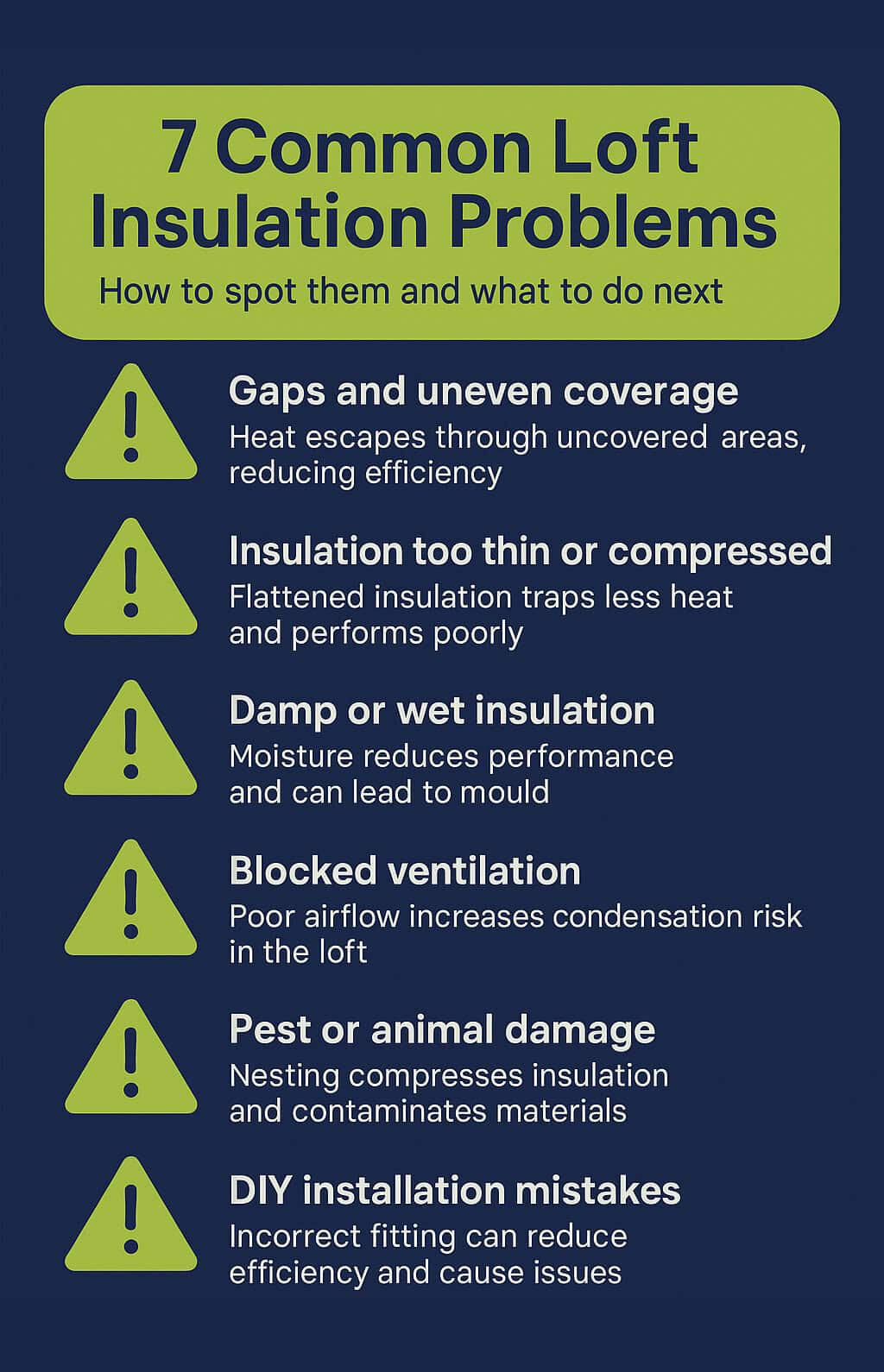
Quick answer: Common loft insulation problems include poor coverage, compressed insulation, blocked ventilation, moisture build up, pest damage and incorrect DIY installation. Left unresolved, these issues can reduce energy efficiency, increase heating bills and contribute to condensation or damp problems. A professional loft assessment helps identify the cause and fix it properly.
Loft insulation is one of the most effective ways to improve your home’s comfort and efficiency. However, when insulation is poorly installed, damaged or simply past its best, it can create problems rather than solving them.
In this guide, we look at the most common loft insulation issues homeowners face, how to spot them, and what can be done to put them right.
What we cover in this guide
- Common signs your loft insulation is not working properly
- Gaps and uneven insulation coverage
- Insulation that is too thin or compressed
- Moisture, damp and condensation
- Blocked loft ventilation
- Pest or animal damage
- Poor quality or unsuitable materials
- DIY installation mistakes
- When to upgrade or replace loft insulation
- FAQs
Common signs your loft insulation is not working properly
Some insulation issues are obvious, but many are easy to miss until you notice your home feels colder or your bills start creeping up.
- Cold rooms, especially upstairs.
- Draughts and uneven temperatures throughout the house.
- Higher heating bills with no clear reason.
- Damp smells, mould, or condensation in the loft space.
- Insulation that looks flattened, patchy, or disturbed.
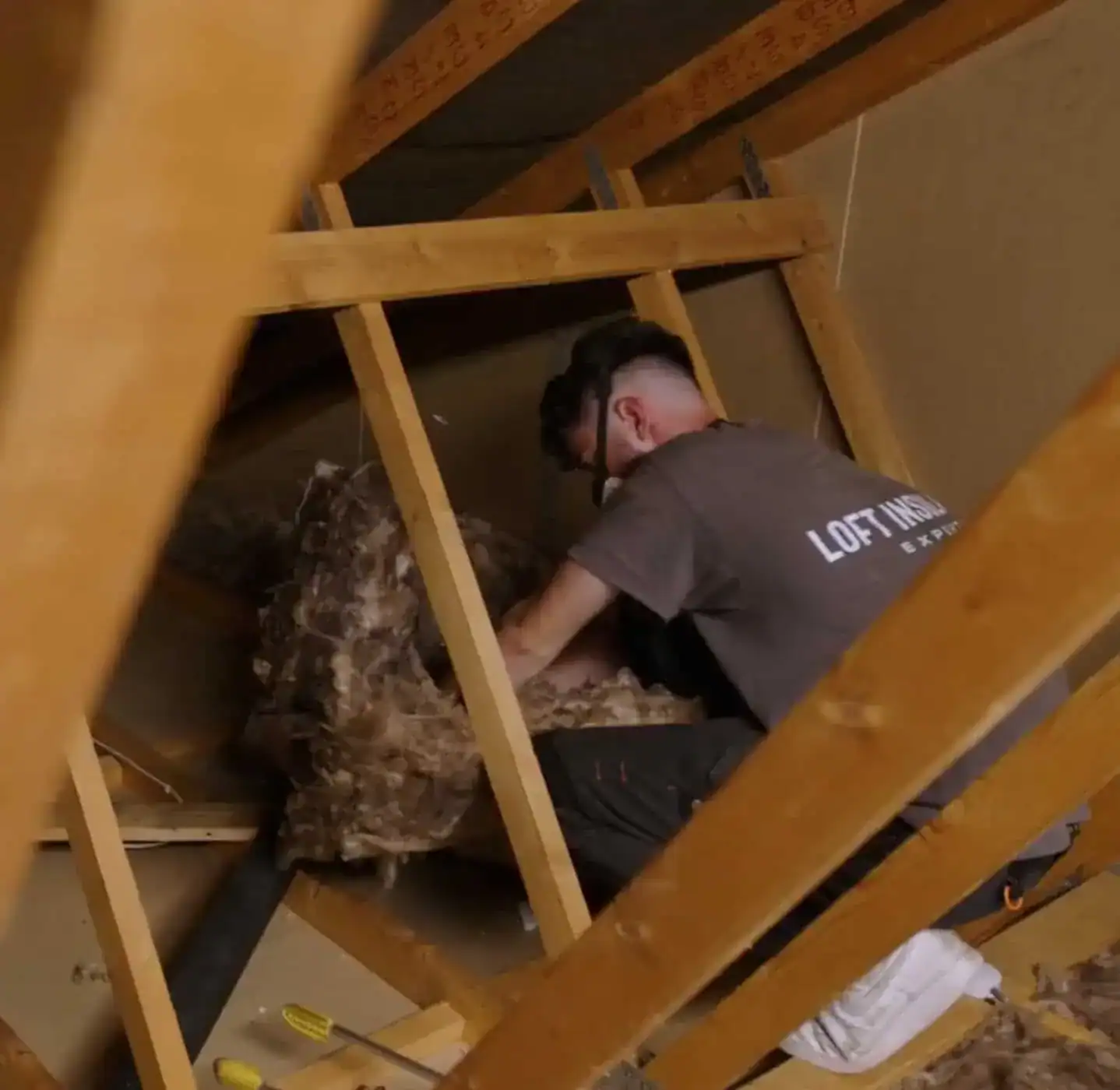
If you suspect your insulation is no longer performing, it is usually worth starting with a professional check of your loft insulation and layout. You can find out more about our service here: Loft insulation installation and replacement.
1. Gaps and uneven insulation coverage
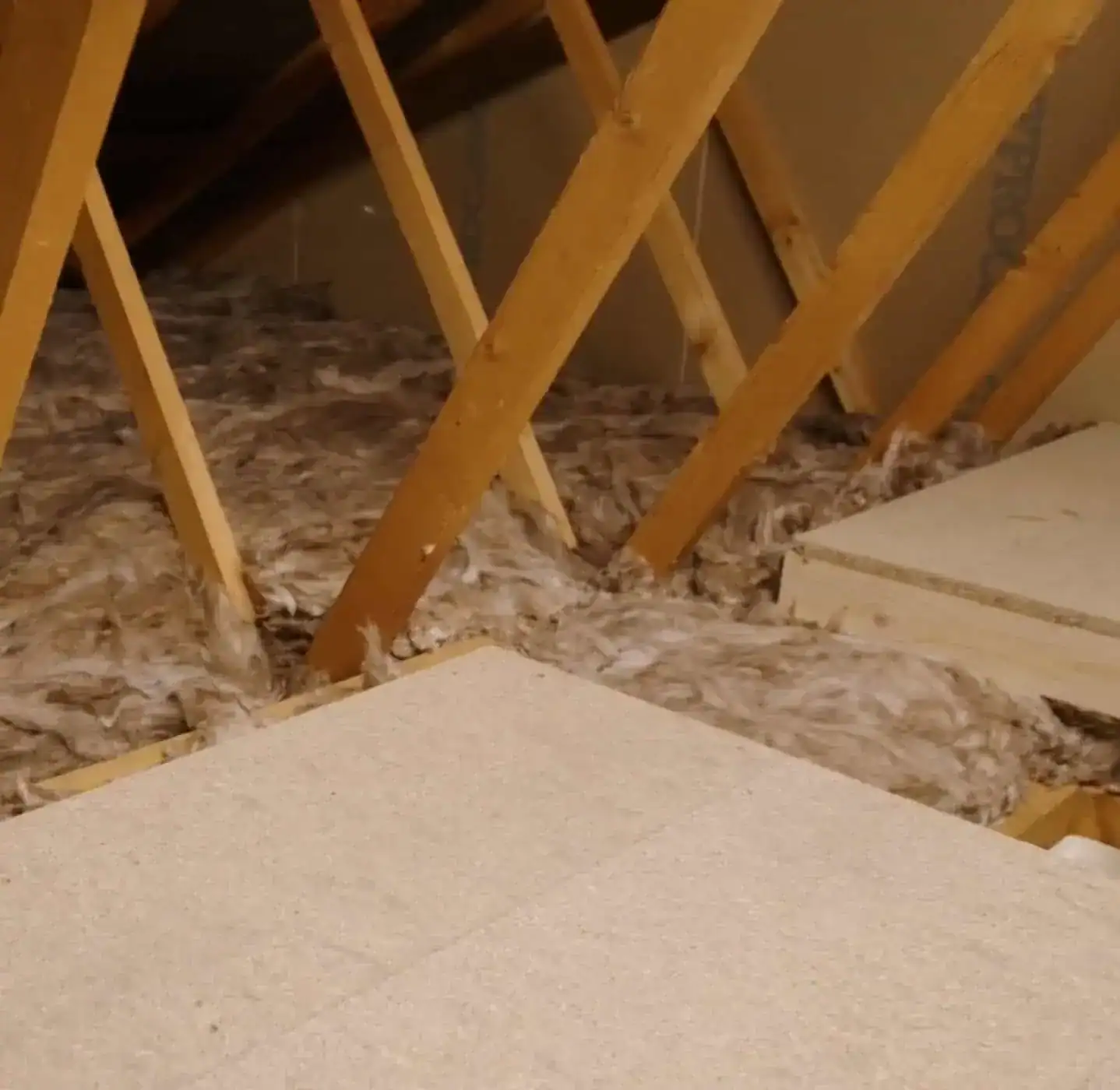
One of the most common problems is insulation that has been laid unevenly or has gaps between sections. Even small gaps allow heat to escape, reducing overall performance.
This often happens in older properties where insulation has been topped up over time, or where previous work has been moved around for storage, cables, or lighting.
How to fix it: A proper survey will identify thin areas and missing coverage so insulation can be relaid or topped up evenly to the correct depth.
2. Insulation that is too thin or compressed
Many homes still have insulation levels that fall short of current guidance. Another issue is compression, where insulation gets squashed under stored items or boarding, which reduces its ability to trap heat.
If you use your loft for storage, it is worth ensuring the insulation is protected and not compressed. In many cases, combining insulation with a raised storage solution makes a big difference. If you are considering this, see: Loft boarding.
How to fix it: Top up insulation to the right depth and avoid compressing it. If you need storage, use a system that maintains airflow and insulation performance.
3. Moisture, damp and condensation
Moisture problems in lofts are often linked to a combination of warm air rising from the home below and insufficient ventilation above. Damp insulation loses performance quickly and can contribute to mould and timber issues.
Warning signs include water droplets on felt, mould on rafters, damp smells, and insulation that feels wet or heavy.
If this sounds familiar, this related guide will help: Can old loft insulation cause damp or condensation problems?
How to fix it: Identify the moisture source, check ventilation, and replace any damp or contaminated insulation. Addressing ventilation is often essential, not optional.
4. Blocked loft ventilation
Ventilation is vital for controlling moisture levels in your loft. Insulation that blocks airflow at the eaves can trap warm, moist air and increase the risk of condensation.
This issue is common where insulation has been pushed too far into the eaves or installed without ventilation trays and clear air pathways.
How to fix it: Ensure ventilation routes are clear and insulation is installed in a way that allows the loft to breathe. This is one of the most important checks during an insulation upgrade.
5. Pest or animal damage
Birds, rodents and insects can nest in loft insulation, compressing it and contaminating it with droppings. Aside from reducing thermal performance, it can also create hygiene concerns and unpleasant odours.
How to fix it: Remove and replace affected areas and address entry points. In many cases, a full replacement is the safest option.
6. Poor quality or unsuitable materials
Not all insulation performs the same way, and older materials may not meet modern expectations. In some lofts, different materials have been layered together without a plan, which can cause uneven performance.
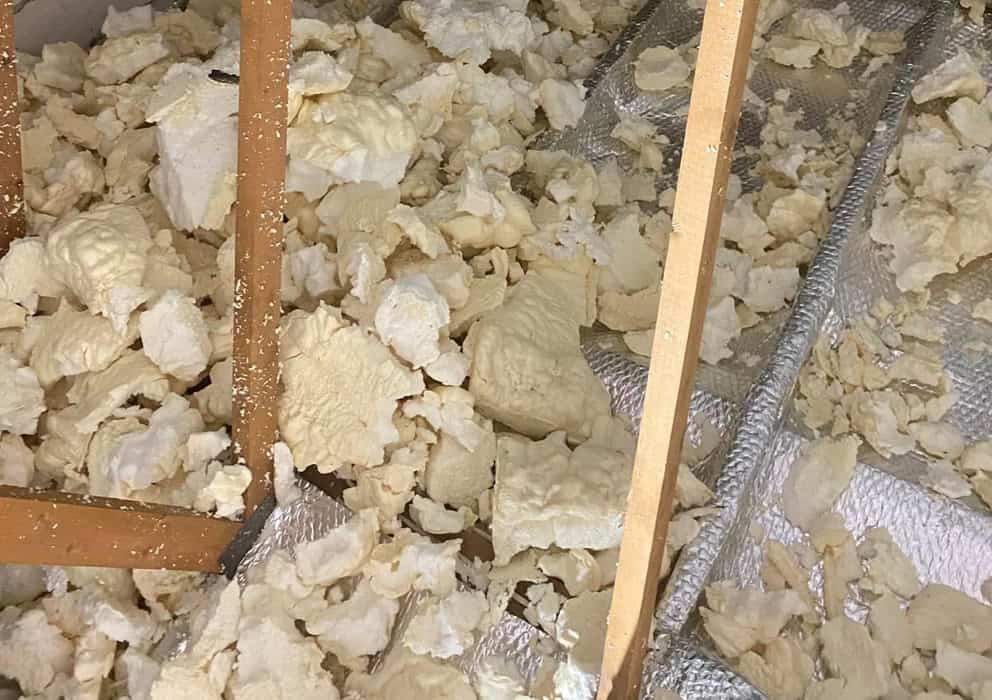
Many homeowners now also need advice on spray foam insulation, especially where it has caused moisture or mortgage issues. If you are unsure whether spray foam is a concern in your home, see: Spray foam insulation mortgage problems.
How to fix it: Use a consistent approach suited to your loft. For many homes, mineral wool remains a reliable, cost effective option. You can also explore natural options here: Wool loft insulation.
7. DIY installation mistakes
DIY loft insulation can look simple, but common mistakes include blocking ventilation routes, compressing insulation with stored items, and failing to deal with damp insulation before adding more.
It is also important to consider safe loft access if you regularly need to check the space. If your current access is awkward or unsafe, see: Loft ladder installation.
How to fix it: If insulation has been laid incorrectly, it is usually best to have it assessed and corrected professionally to avoid long term performance issues.
When should loft insulation be upgraded or replaced?
You should consider an upgrade if your insulation is patchy, damp, compressed, contaminated by pests, or well below the level needed for good performance.
It is also worth upgrading if your home feels cold upstairs, your heating bills have increased, or you have noticed condensation issues in the loft.
If you are deciding between topping up and full replacement, this guide is useful: Loft insulation cost: 6 key factors.
FAQs
How long does loft insulation last?
Many insulation materials can last for decades, but performance drops if insulation becomes damp, contaminated, compressed or disturbed.
Can bad loft insulation cause mould?
Yes. Poor insulation combined with inadequate ventilation can increase condensation and mould growth, particularly in colder months.
Is it better to top up or replace insulation?
If insulation is clean, dry and in good condition, topping up can work well. If it is damp, mouldy, compressed or contaminated, replacement is usually the better option.
Need expert loft insulation advice in the South of England?
If you are based in the South of England and are concerned about heat loss, rising heating bills or condensation in your loft, our team can help. We provide professional loft surveys and installations across Hampshire and the surrounding counties, helping homeowners improve comfort, efficiency and long term performance.
If you are unsure whether your current insulation is doing its job, get in touch for expert advice or a no obligation assessment. You can also view our main loft insulation service here.