
How Much Loft Insulation Do I Need? Recommended Depths for UK Homes
Quick answer: For mineral wool loft insulation, 270mm is the depth most commonly recommended for UK homes, and many installers now fit 300mm. If your loft has less than this, particularly 100mm or less, it is usually worth upgrading. The right depth also depends on the material used, the condition of what is already there and whether the loft is used for storage.
If you have looked into your loft and wondered whether the insulation is thick enough, you are not alone. Plenty of homes still have the thin layer that was fitted decades ago, or a patchwork of rolls added over the years. This guide explains how much loft insulation a typical home needs, how to check what you have and what affects the right depth for your property.
How much loft insulation is recommended in the UK?
The Energy Saving Trust recommends a depth of 270mm when using mineral wool loft insulation. This is also the figure most homeowners will hear from installers, surveyors and energy assessors.
For work that upgrades an existing loft, Building Regulations guidance in England sets a target U-value of 0.16 W/m²K for a pitched roof insulated at ceiling level. The U-value measures how quickly heat passes through a part of the building, so a lower figure is better. With standard mineral wool, around 270mm is generally needed to reach that level.
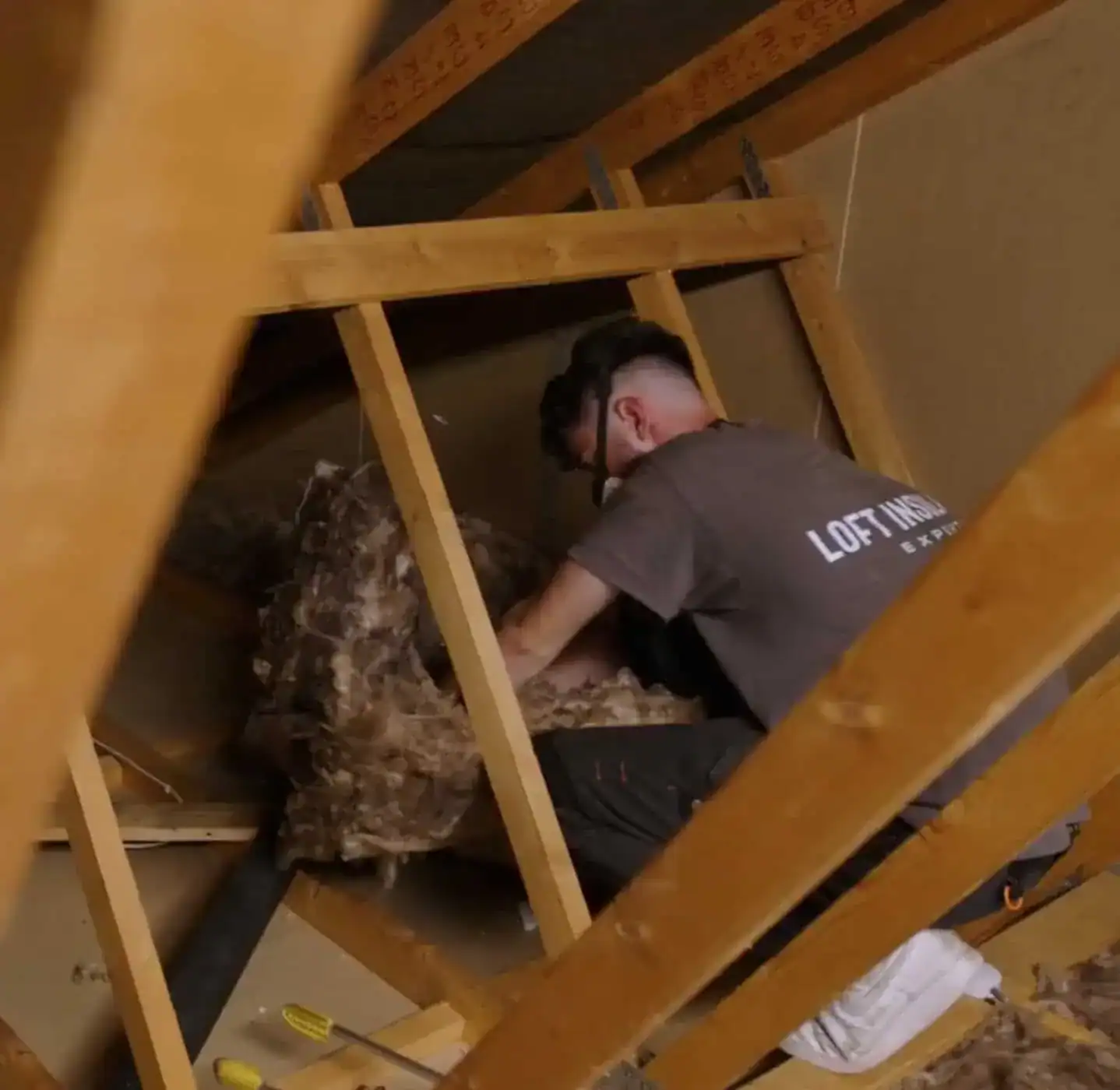
At Loft Insulation Experts, we install 300mm of mineral wool, which takes the loft beyond the commonly recommended depth and allows for some natural settling over time.

Why older homes often have too little insulation
Insulation standards have risen steadily over the years. Many lofts were insulated when 25mm, 50mm or 100mm was considered acceptable, and that original layer is often still in place today.
Even where a reasonable depth was fitted, it may no longer perform as it should. Common problems include:
- Insulation squashed by boxes, boards or foot traffic
- Gaps where rolls were never butted together properly
- Areas disturbed by electricians, plumbers or aerial installers
- Insulation that has become damp, dirty or contaminated
- Older loose fill material that has shifted or settled
Our guide to the signs your loft insulation needs replacing covers these issues in more detail.
How to check the depth of your loft insulation
You can get a rough idea of your current insulation depth with a tape measure. Only do this if the loft is safe to enter, and always stand or kneel on the joists or on secure boarding, never on the insulation or the ceiling between the joists.
- Push a ruler or tape measure gently down through the insulation until it touches the ceiling below.
- Measure in several places, away from the hatch and the eaves, as the depth often varies across the loft.
- Note whether the joists are visible. Joists in most homes are around 100mm deep, so if you can see the tops of them, the insulation is almost certainly below the recommended level.
- Look for areas where the insulation is flattened, missing or noticeably thinner.
If you see wet patches, mould, droppings or crumbly loose fill material, avoid disturbing it and arrange a professional inspection.
How loft insulation is usually laid to reach 270mm or more
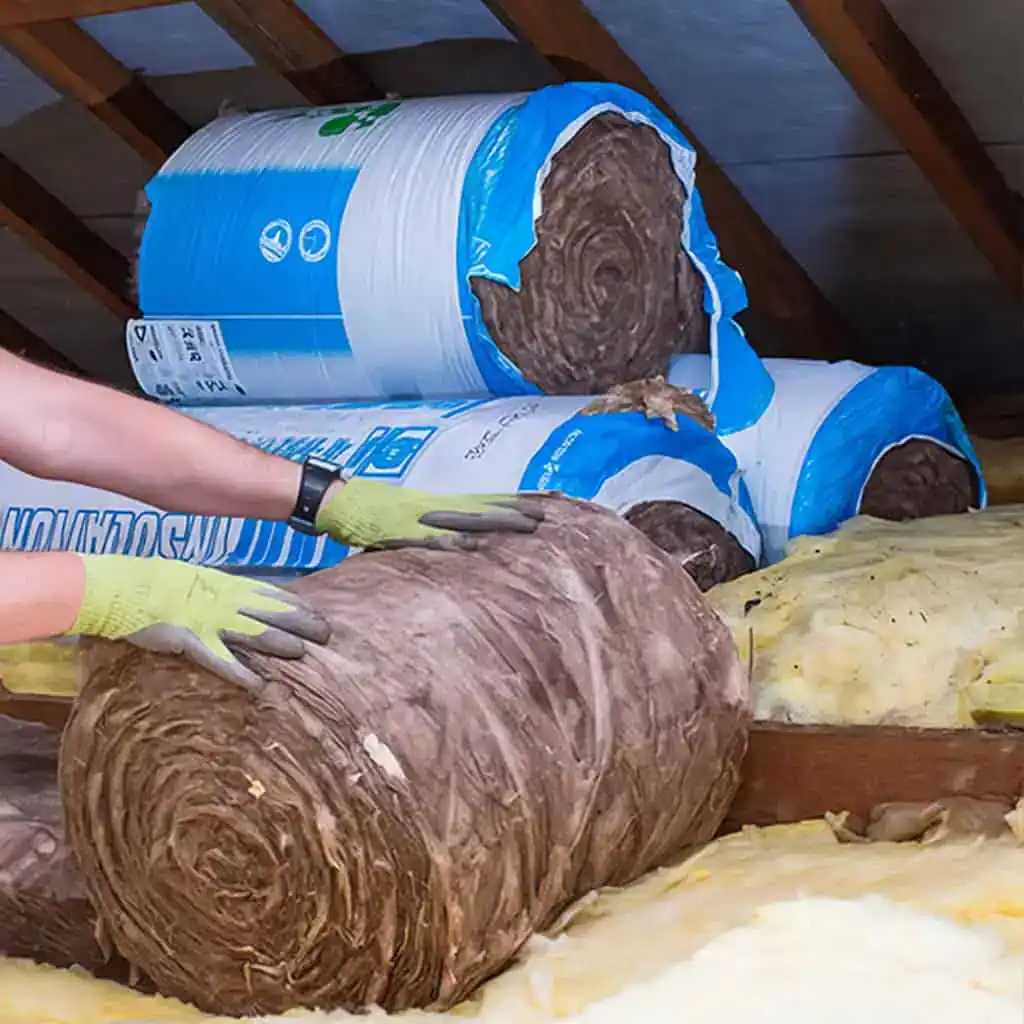
In a typical loft, insulation goes down in two layers:
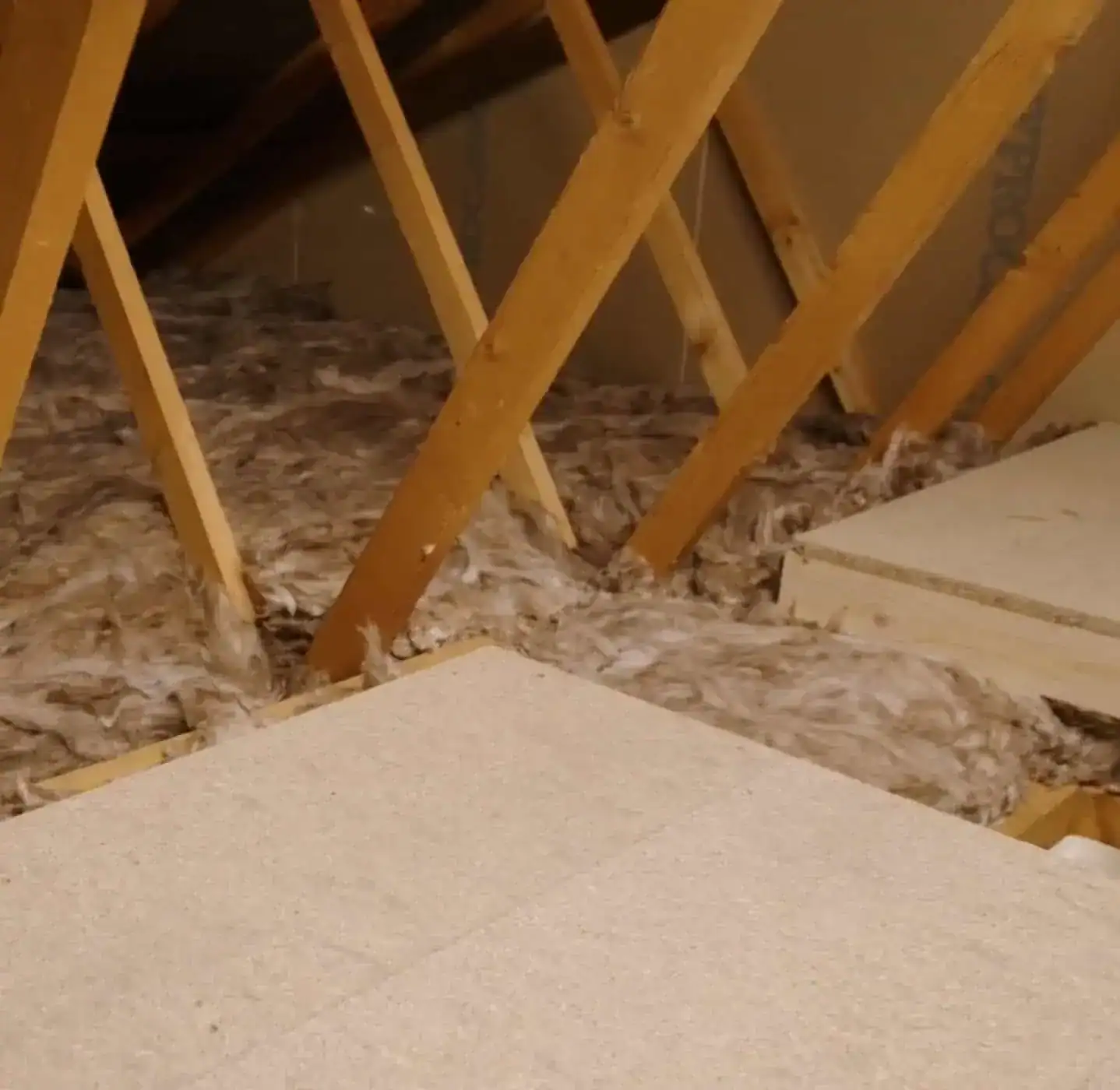
- The first layer is laid between the ceiling joists, filling the space up to the top of the joists.
- The second layer is laid across the joists at right angles to the first. This covers the timbers, which would otherwise act as cold bridges, and builds the total depth up to the target level.
Laying the top layer across the joists also reduces gaps between rolls, which helps the insulation perform more consistently across the whole loft. The loft hatch should be insulated and draught sealed as well, as explained in our guide to loft hatch insulation.
Does the type of insulation affect the depth you need?
Yes. The 270mm figure applies to mineral wool, which is the most widely used loft insulation in the UK. Different materials have different thermal performance, so the thickness required to reach the same standard varies.
- Mineral wool (glass or rock wool) is cost effective, non-combustible and the usual choice for ceiling level loft insulation.
- Sheep's wool is a natural, breathable option that many homeowners prefer to handle and live with. It needs to be installed at a suitable depth to give comparable performance. Read more about our wool loft insulation service.
- Rigid boards, such as PIR, offer more insulation per millimetre but are generally used between or under rafters rather than across the loft floor.
Our guide on which type of loft insulation is best compares the main options.
Can you have too much loft insulation?
Adding insulation beyond the recommended depth gives smaller and smaller improvements, so there is little benefit in going far beyond 300mm in a standard cold loft. More important than extra depth is that the insulation is installed correctly.
Thick insulation should never be packed in so tightly that it:
- blocks ventilation at the eaves, which can lead to condensation in the roof space
- covers recessed downlights that are not designed to be insulated over
- buries electrical cables that could overheat if covered
- sits directly beneath the cold water tank, which relies on some warmth from below to reduce the risk of freezing
We explain these details in our guide to installing loft insulation around downlights, cables and water tanks, and our article on loft insulation and condensation explains why ventilation matters.
What if you want to use the loft for storage?
This is where many homes lose insulation performance without realising. When boards are laid straight onto joists that are only 100mm deep, the insulation underneath is either limited to that depth or squashed flat. Compressed insulation traps less air, so it does not insulate as well.
The usual solution is raised loft boarding, which lifts the boards above the full depth of the insulation. Our article on boarding a loft after insulating it explains how this works, and you can find out more about our loft boarding service.
Should you top up or replace existing insulation?
If the existing insulation is dry, clean and reasonably even, it can often be topped up to the recommended depth. If it is damp, contaminated, heavily compressed or mixed with debris, removing it and starting again is usually the better option.
We explain how to decide in our guide on whether old loft insulation should be removed or topped up. During a survey, we check the condition of the existing material before recommending either approach.
Frequently asked questions
Is 200mm of loft insulation enough?
200mm is far better than an uninsulated or thinly insulated loft, but it falls short of the 270mm commonly recommended for mineral wool. If you have 200mm in good condition, topping it up is usually a straightforward job.
Is 100mm of loft insulation enough?
No. 100mm is well below current recommendations. It usually means the insulation only fills the space between the joists, leaving the timbers themselves uncovered.
Does loft insulation depth affect my EPC?
Loft insulation depth is one of the details recorded during an EPC assessment, so improving it can contribute to a better rating. The overall result depends on the whole property, including walls, windows and heating. Our article on improving your EPC rating has more information.
Does insulation lose depth over time?
Loft insulation can settle slightly and is often compressed by storage, foot traffic and other trades working in the loft. Checking it every few years, and after any work in the loft, helps make sure it is still doing its job.
What depth do you install?
We install 300mm of mineral wool insulation as standard, laid in two layers to give full coverage across the loft. Where sheep's wool is preferred, we can advise on the right specification during the survey.
Find out whether your loft needs more insulation
If you are not sure how much insulation you have, or whether it is in good enough condition to top up, a survey will give you a clear answer. Loft Insulation Experts provides free surveys and fixed quotations for loft insulation installation and replacement across Hampshire and the surrounding counties. You can check the towns we cover on our areas we serve page.
Call us on 01264 554551 or contact us online to arrange your free survey.